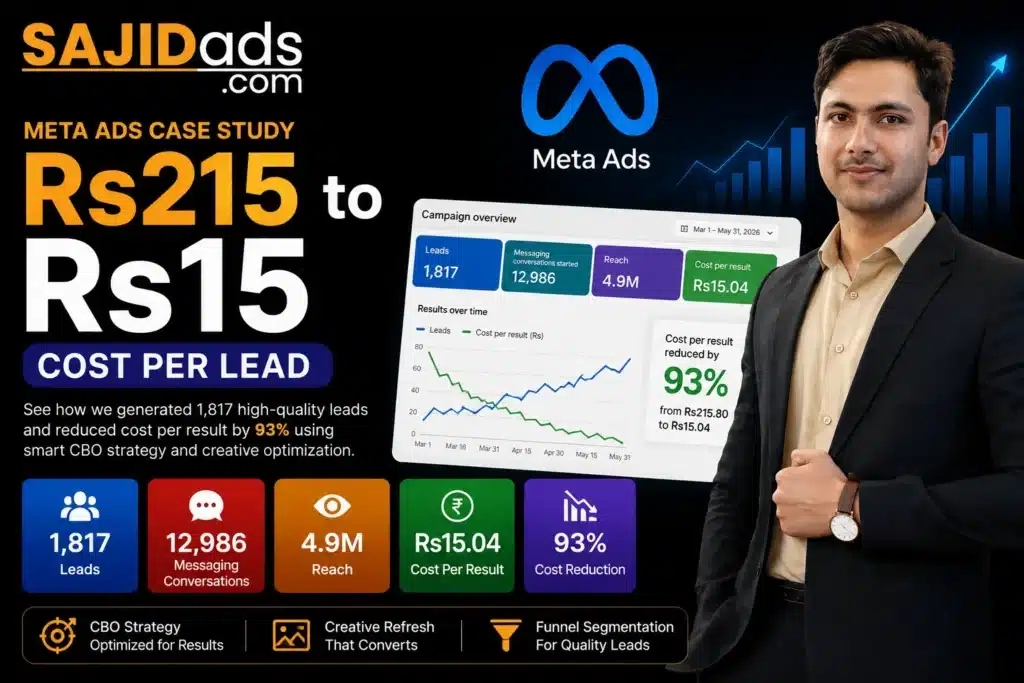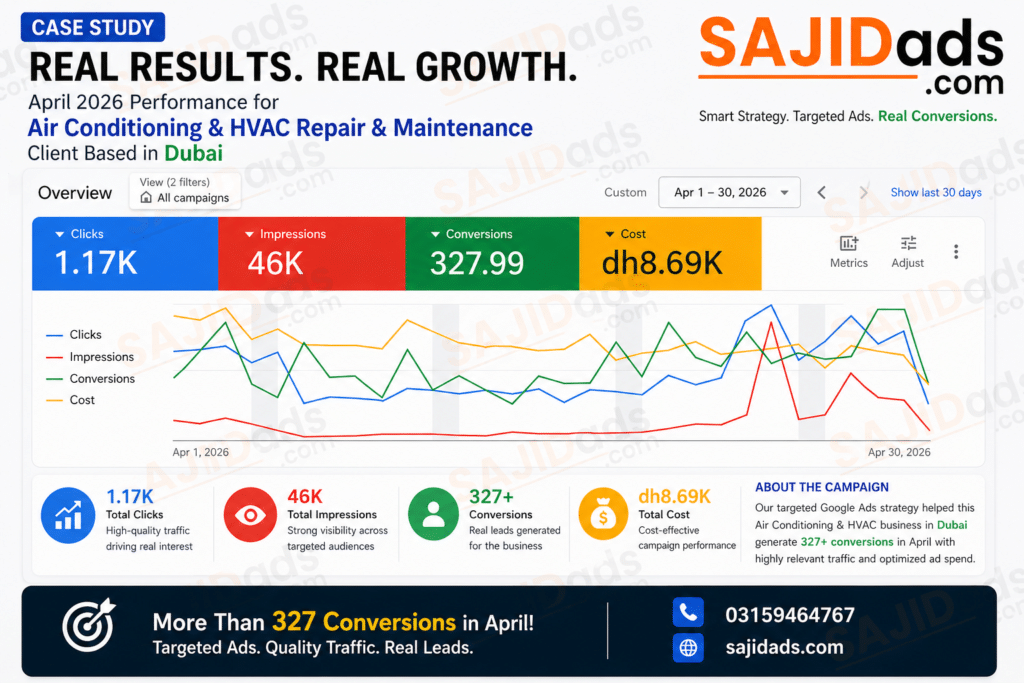
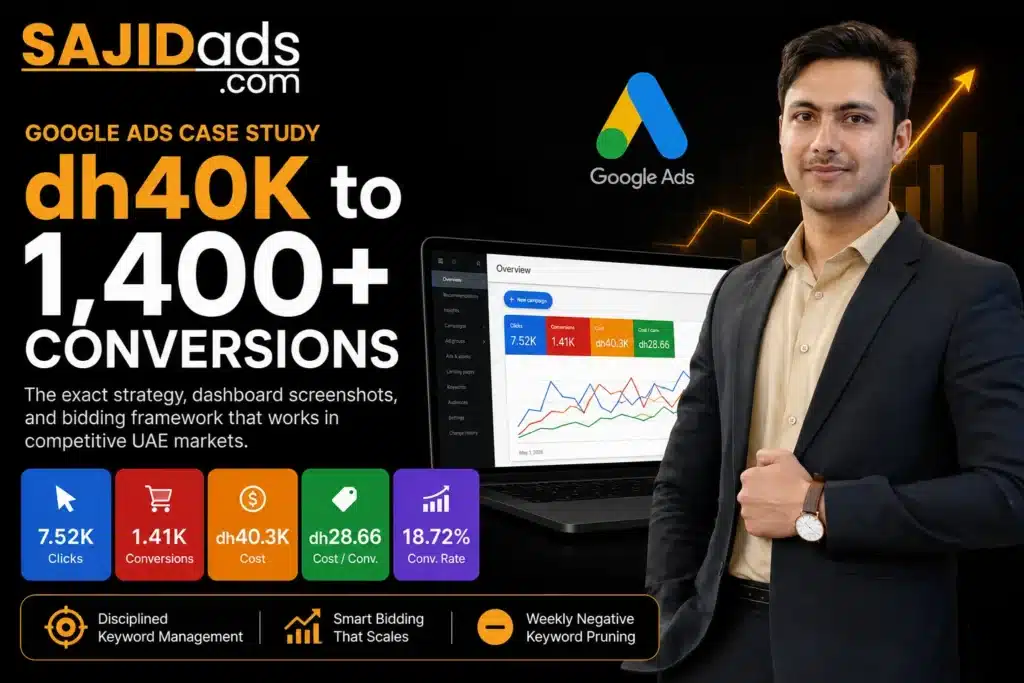
What if your Google Ads budget stopped feeling like a gamble? That’s the exact question one of our clients asked before we took over their account. Four months later, the numbers spoke for themselves.
Yes, a well-structured Google Ads account can consistently deliver a low cost-per-conversion even in competitive markets — if your keyword match types, bidding strategy, and conversion tracking are set up correctly. Below is exactly how we did it, with the raw data to prove it.
The Challenge
Most businesses that come to us have already “tried Google Ads” once — usually with a generic setup, broad match keywords, and no real conversion tracking. The result is always the same: high spend, low-quality leads, and no clear ROI. The account needed a full rebuild: tighter keyword targeting, proper conversion tracking, and a bidding strategy that actually reflected the client’s sales cycle.
The Strategy We Used
- Search-intent keyword mapping — separating high-intent transactional keywords from broad research terms so budget wasn’t wasted on window-shoppers.
- Smart Bidding calibrated to real conversion data — once we had 30+ days of clean data, we shifted from manual CPC to a Target CPA strategy.
- Continuous negative keyword pruning — every week, we reviewed the search terms report and cut anything that wasn’t converting.
The Results (Straight From the Dashboard)
Here’s the actual Google Ads Overview report for this account, covering March 1 – July 12, 2026:
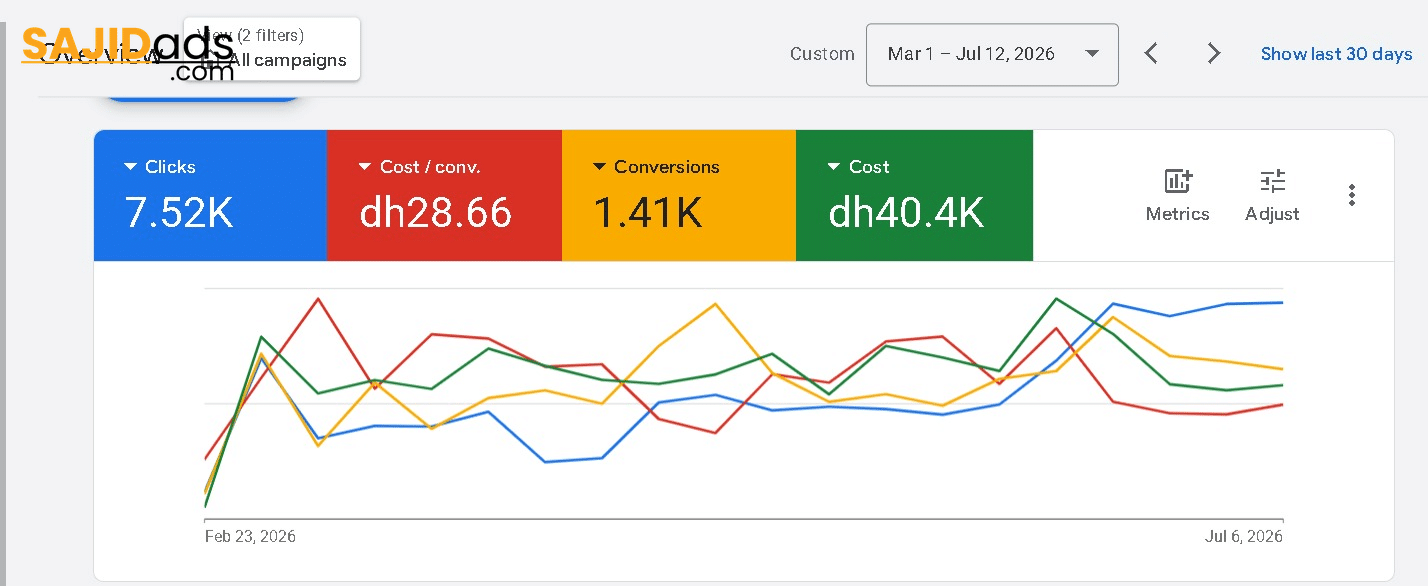
7,520 clicks, 1,410 conversions, and a cost per conversion of dh28.66 — proof that disciplined account management beats bigger budgets.
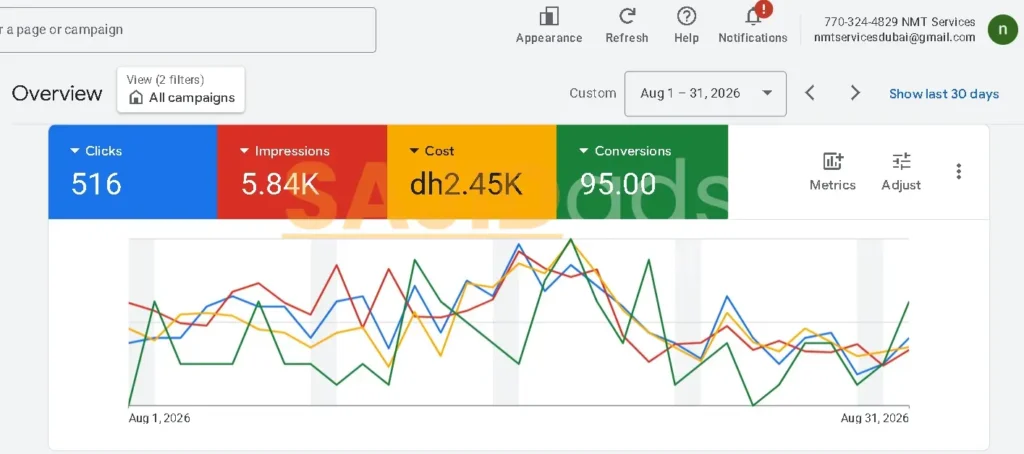
On a second, more tightly scoped campaign, we saw an even sharper efficiency curve:
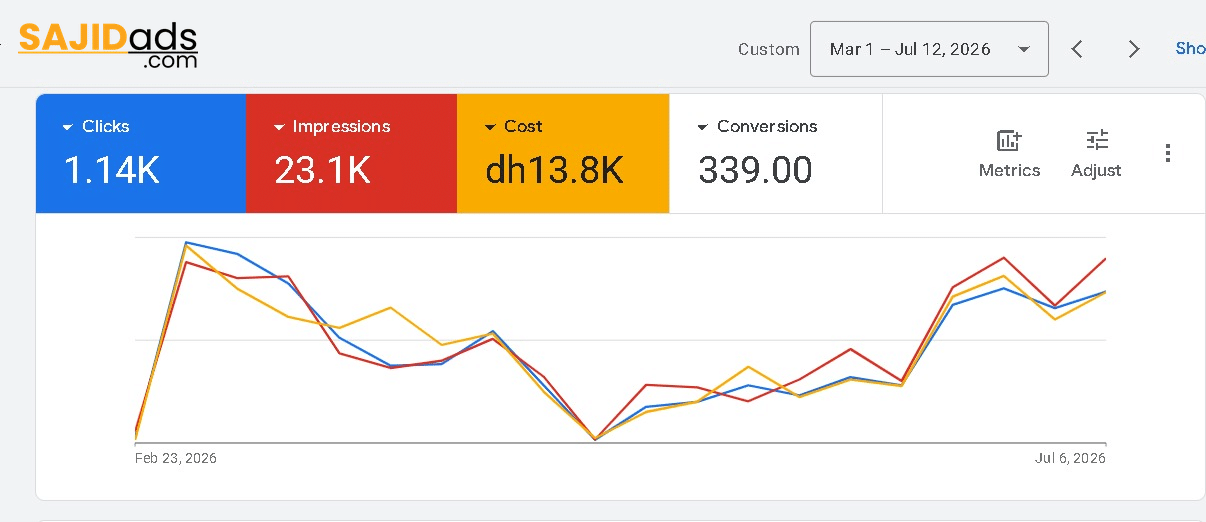
339 conversions from just dh13.8K in spend — this is what happens when negative keywords are managed weekly instead of monthly.
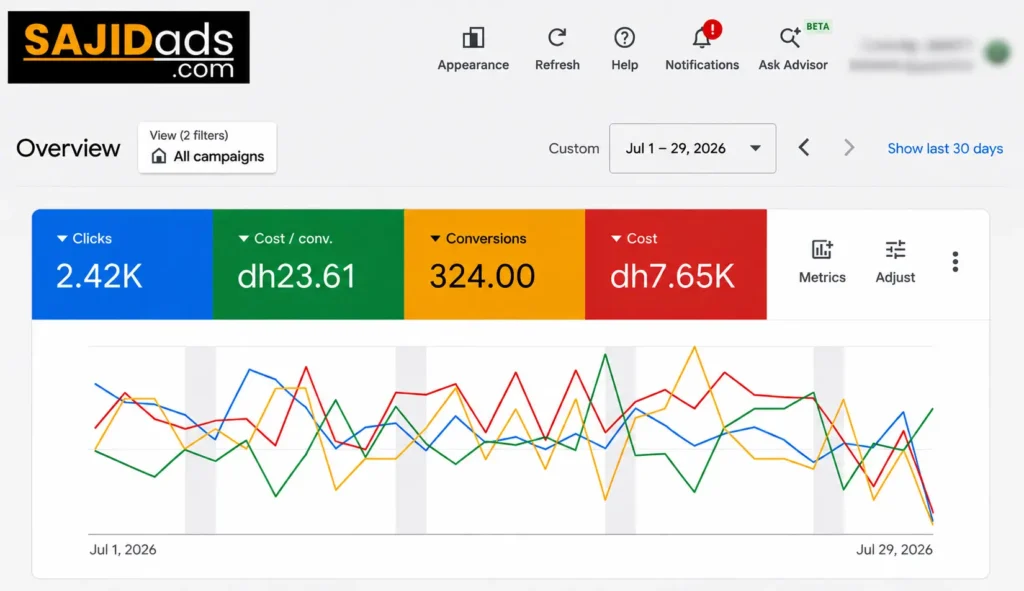
And on a campaign optimized specifically for click-through rate and ad relevance:
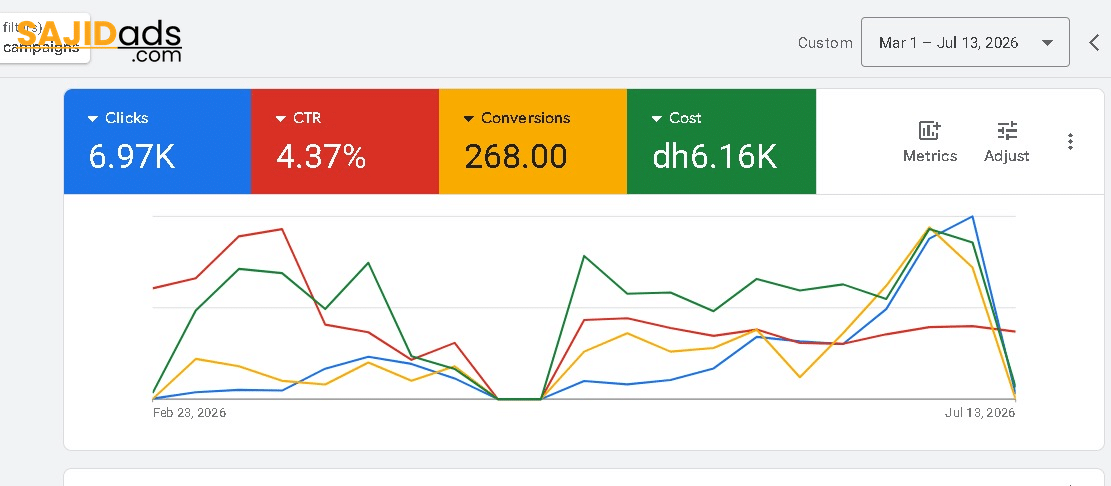
A 4.37% CTR is well above the typical search network average — a direct result of tightly themed ad groups and strong ad copy.
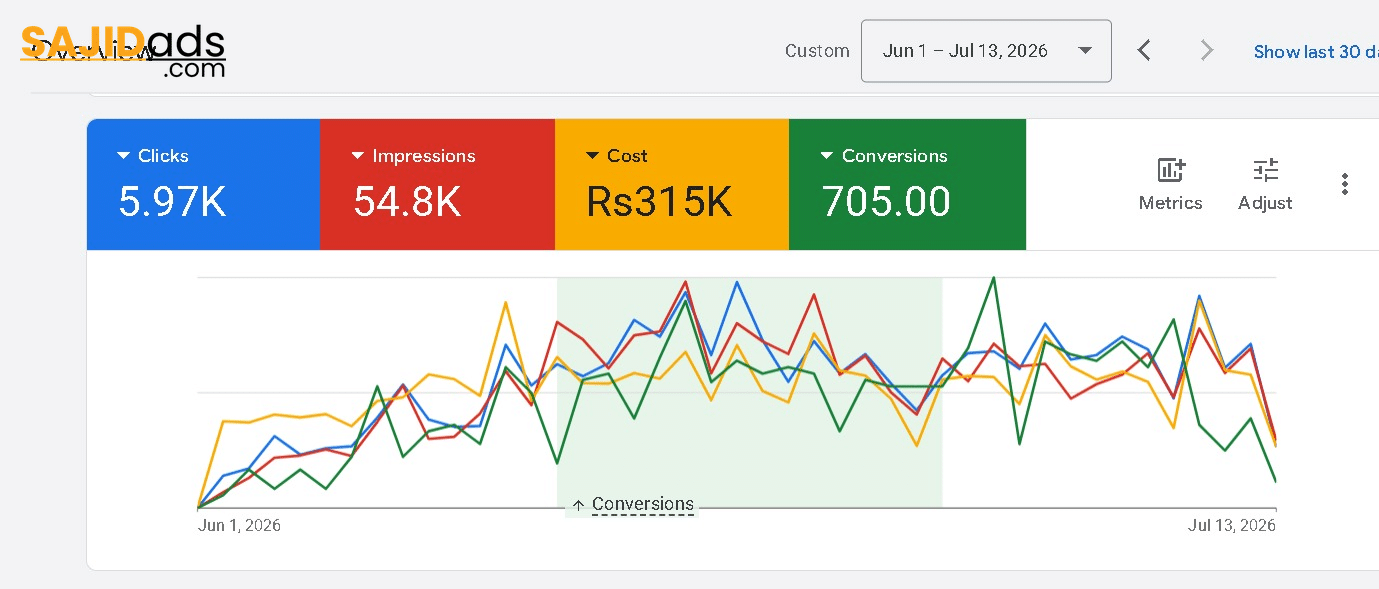
Performance consistency across multiple campaigns — the result of repeatable, systematic optimization rather than one-off wins.
Why This Matters for Your Business
These aren’t inflated agency screenshots — they’re the same reports any client can pull from their own Google Ads account. Google Ads works when the account structure, tracking, and bidding strategy are aligned with how your customers actually search. If you’re running Meta Ads alongside Google Ads, the two channels compound — Meta builds awareness, Google captures the high-intent search traffic that follows. Read the Meta Ads Success Story for another example.
If your organic traffic also needs a boost alongside paid search, our SEO services are designed to work in tandem with Google Ads. See the real ranking data in our companion post: SEO Success Story (Search Console Case Study).
Frequently Asked Questions
1.How much should I spend on Google Ads to see real results?
There’s no universal number — it depends on your industry’s cost-per-click and sales cycle. Meaningful conversion volume appeared once the account had a consistent daily budget and at least 30 days of clean conversion data for Smart Bidding to learn from.
2.Why is my Google Ads cost per conversion so high?
The most common causes are broad match keywords without negative keyword lists, poor conversion tracking setup, and landing pages that don’t match search intent.
3.What is a good CTR for Google Ads in 2026?
On the Search Network, anything above 3–4% is considered strong. One campaign here achieved a 4.37% CTR, driven by tightly themed ad groups rather than broad, generic ad copy.
4.Should I use manual CPC or Smart Bidding?
Start with manual CPC or Maximize Clicks to gather conversion data, then transition to Target CPA or Target ROAS once you have enough conversion volume.
5.How long does it take to see results from Google Ads?
Some traffic arrives immediately, but meaningful optimization typically takes 4–8 weeks as the account gathers data on what actually converts.
6.Is Google Ads better than Meta Ads for lead generation?
They serve different purposes. Google Ads captures people already searching (high intent), while Meta Ads reaches people who don’t yet know they need your service. Most of our best-performing accounts run both.
7.What industries get the best ROI from Google Ads?
Service-based businesses with clear transactional search intent — clinics, real estate, company formation, home services — tend to see the fastest ROI.
8.How do I know if my Google Ads account is set up correctly?
Check for accurate conversion tracking, a weekly-updated negative keyword list, and ad groups organized by tightly related keyword themes.
9.Can a freelancer manage Google Ads as well as an agency?
Yes — what matters is hands-on, weekly account management, not team size. These results came from direct, consistent optimization rather than automated management.
10.How do I get started with Google Ads for my business?
The fastest way is a free account audit. Contact us or book a free strategy call to see exactly where your account is losing budget.
Backed by Real Client Results
Ready to Get These Results for Your Business?
If you’re ready to turn your Google Ads spend into real, trackable conversions, let’s talk.
- Email: ask@sajidads.com
- Phone / WhatsApp: +971 525 496 974 | +92 313 9602192
- Book a free call: calendly.com/asksajidads/30min